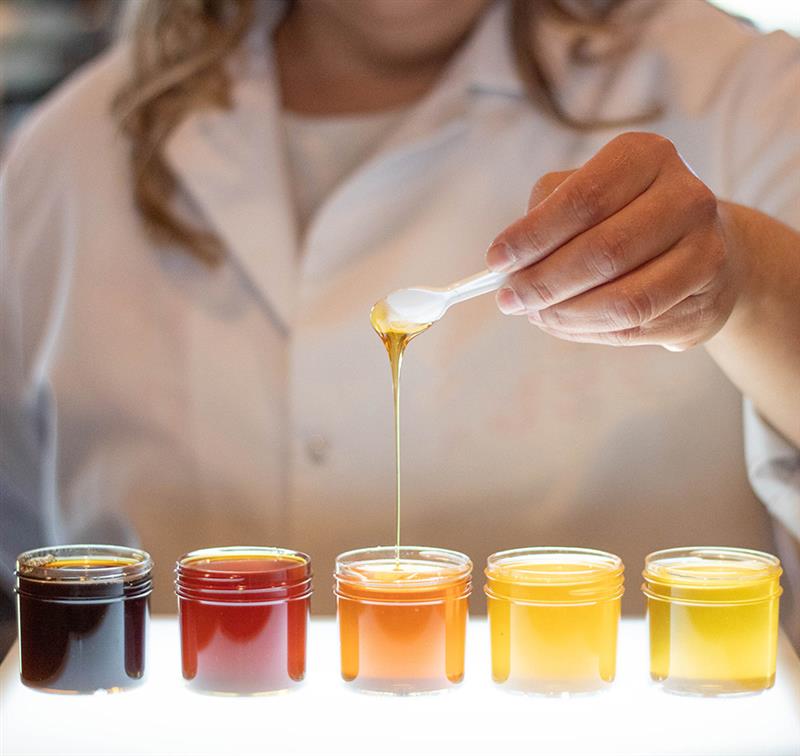
Honey is far more than just a sweetener; it’s a natural, complex substance enjoyed over centuries for its unique sensory and wellness properties. When you look at a row of honey bottles, you see a striking palette – from nearly colorless white, to deep, rich amber, to everything in between.
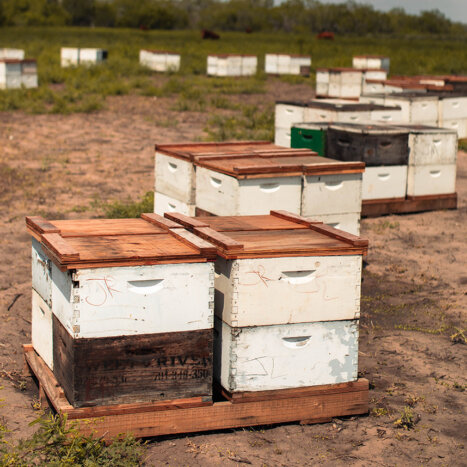
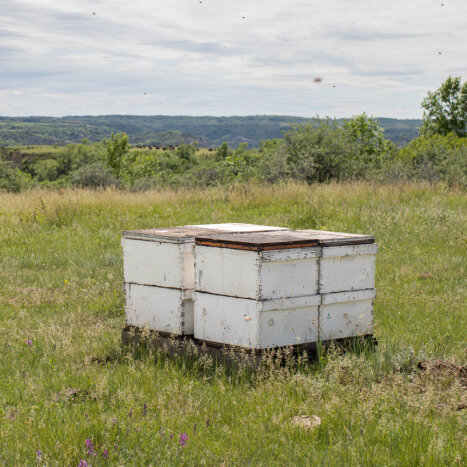
This array of shades isn’t accidental; it’s a living map of the honey bees’ foraging journey, the geography of the hive and the very chemistry that makes honey a powerhouse ingredient.
The variety of color and flavor begins with a simple fact: Honey bees visit different flowers, and different flowers produce different-colored nectar. This truth is why you can have a light, delicate clover honey one season and a dark, molasses-like buckwheat honey the next.
Understanding honey’s color is to understand its core properties, from its antioxidant capacity to its botanical origin.
Where Do the Beautiful Colors of Honey Come from?
Honey is composed primarily of naturally occurring sugars (80–85%) and water (15–17%), but the trace elements are what determine its vibrant characteristics. The color is directly influenced by the presence of phenolic compounds (or polyphenols), flavonoids and minerals present in the nectar collected by the honey bees.
What Are Phenolic Compounds, and How Do They Impact Color?
A phenolic compound is a type of natural chemical made by plants that help protect them from stress, disease and damage. These compounds are found in many foods we eat – like honey – and are known for their antioxidant properties, which means they help protect cells from harm.
- Color Correlation: Darker honeys generally contain a higher quantity of phenolic compounds and minerals than lighter-colored honeys. These compounds are secondary metabolites from the plants the honey bees forage on, and the amount present directly pigments the final product.
- Antioxidant Power: Numerous studies show a strong positive correlation between the total content of phenolic compounds and the antioxidant capacity of honey. So, while a dark color may signal a strong, robust flavor, it also acts as a visual proxy for a higher concentration of powerful antioxidants.
Other Influences beyond Nectar
While the floral source is the primary determinant, honey’s color can also be affected by:
- Sugar Content: The types of natural sugars (monosaccharides) present can influence color development, as these sugars are responsible for other sensory properties like flavor and texture.
- Processing and Storage: The color can darken due to heat exposure or prolonged storage, often because of the formation of Maillard reaction products (a chemical reaction between amino acids and reducing sugars) as temperatures increase. At Nate’s Honey, we use minimal heat and carefully strain the honey during the bottling process to preserve the honey’s natural hue.
Flavor Expectation and Culture
Consumer color preferences for honey aren’t universal; they’re influenced by tradition, expected flavor intensity and demographics.
- Lighter Tones: Many North American consumers prefer lighter honeys (like water-white or extra light amber) because they associate them with a milder, less intense flavor.
- Darker Tones: In contrast, consumers in parts of Europe often prefer darker honeys (amber and dark amber tones) because they want a more intense, richer and robust flavor. This aligns with the dark honeys’ higher content of phenolic compounds.
This divergence means the diverse colors of honey are part of its unique appeal, with personal preferences guiding the market.
In the end, honey’s spectrum of gold is a testament to its status as a complex natural food. Every shade – from the lightest white to the deepest dark amber – carries with it a unique blend of flavor, natural benefits and geographical heritage, allowing consumers to choose the perfect honey for their taste and needs.
This article references scientific studies and resources from MDPI, ScienceDirect and Wiley, along with input from the experts at Nate’s Hives, to support its discussion of honey’s color and antioxidant properties.
Read MORE