When most people think of honey, they often picture a sweet liquid that they drizzle over toast or stir into tea. But ask any seasoned beekeeper and they will tell you that honey is just as complex as fine wine or specialty coffee.
Honey can showcase a wide range of flavors, aromas and colors, influenced by the many nectar sources honey bees visit throughout the season. To help beekeepers, chefs and honey lovers describe these variations, the apiculture world uses two visual tools: the Honey Tasting Wheel and the Honey Color Scale.
The Power of the Tasting Wheel
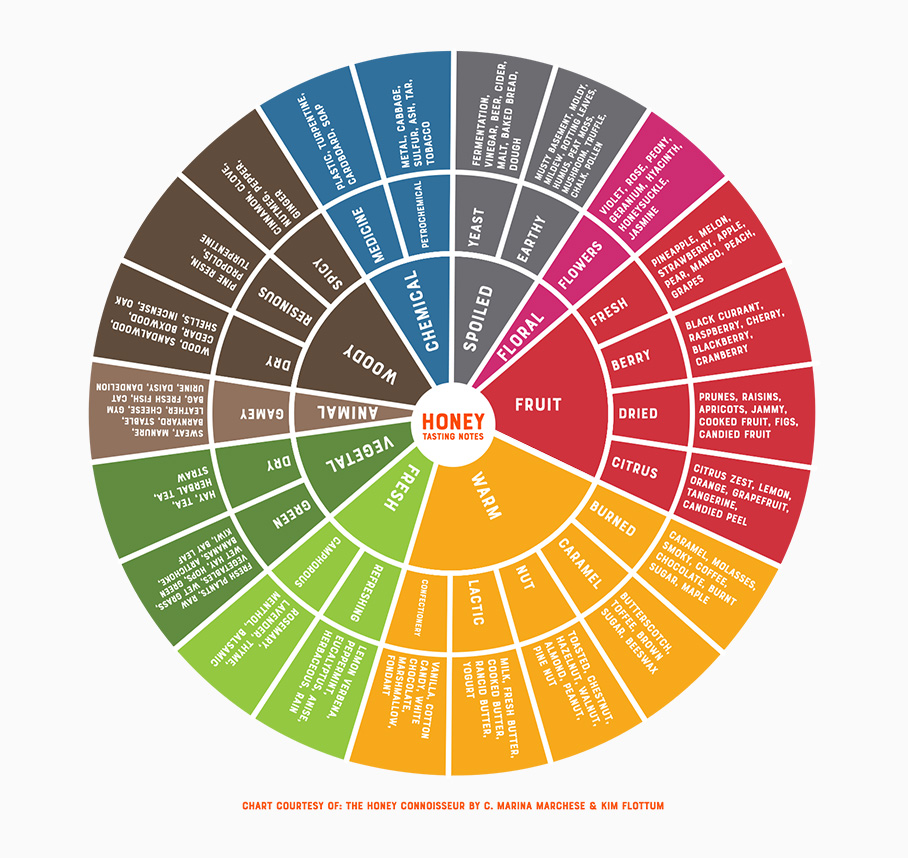
Just as each bottle of wine has its own special tasting notes, honey has a wide spectrum of aromas, mouthfeels and flavor profiles. Developed by sensory experts and apiculturists (like Marina Marchese and Kim Flottum), the Honey Tasting Wheel provides a standardized vocabulary to identify what you are actually tasting.
Characterizing honey isn’t just about fun tasting notes – it serves a crucial role in the industry:
- Classification: Standardizing tasting notes provides a shared vocabulary for describing honey’s unique aromas, flavors and textures.
- Culinary Applications: Understanding whether a honey leans floral, fruity, warm or woody helps chefs and home cooks to pair it intentionally rather than using it merely as a common sweetener.
- Protecting Authenticity: Sensory evaluation helps distinguish honey’s unique flavor characteristics and supports quality assurance efforts throughout the industry.
The wheel categorizes sensory notes into primary categories like floral, fruity, warm, woody, earthy, spicy and fresh, which then branch out into hyper-specific descriptors like citrus zest, butterscotch, pine resin, clove or toasted almond.
Understanding the Honey Color Scale (The Pfund Scale)
Along with flavor, honey is graded globally by its shade using the Pfund Scale – a continuous scale measured in millimeters (mm) ranging from 0 mm (crystal clear) to over 114 mm (deep, opaque dark amber). The USDA categorizes honey into seven official color grades based on these optical measurements:
- Water White (0-8 mm)
- Extra White (8-17 mm)
- White (17-34 mm)
- Extra Light Amber (34-50 mm)
- Light Amber (50-85 mm)
- Amber (85-114 mm)
- Dark Amber (114+ mm)
Generally, lighter honeys come from spring blooms, feature lower mineral content, and offer delicate, mild or sweet floral profiles. Darker honeys are typically harvested in late summer or fall and contain higher concentrations of minerals and antioxidants, resulting in bold, robust or malty flavors.
Color, Tasting Notes & Food Pairings
To bring these tools together, here is a look at where famous honey varieties land on the color scale, their corresponding notes on the tasting wheel and how to pair them in your kitchen:
1. Extra White to White (8-34 mm)
- Varieties: Orange Blossom, Clover, Lavender, Acacia.
- Tasting Wheel Notes: Citrus zest, fresh flowers, vanilla, marshmallow, faint mint.
- Flavor Profile: Light, crisp and delicately sweet without overwhelming the palate.
- Common Food Pairings: Drizzle over mild goat cheese or fresh ricotta, swirl into delicate white or green teas, pour over yogurt and berries, or use in light vinaigrettes.
2. Extra Light Amber to Light Amber (34-85 mm)
- Varieties: Wildflower, Sourwood, Tupelo, Eucalyptus.
- Tasting Wheel Notes: Butterscotch, warm caramel, herbal tea, cinnamon, dried apricot.
- Flavor Profile: Well-balanced and versatile, featuring a smooth sweetness with lingering herbal or warm confectionery undertones.
- Common Food Pairings: Perfect for pairing with aged cheeses like Manchego or Gruyère, glazed over roasted pork or carrots, spread onto warm buttermilk biscuits or mixed into daily black coffee.
3. Amber to Dark Amber (85-114+ mm)
- Varieties: Buckwheat, Avocado, Chestnut, Forest Honeydew.
- Tasting Wheel Notes: Molasses, smoky, dark chocolate, coffee, malty, earthy/woody.
- Flavor Profile: Deep, bold and intense, with a rich, almost savory complexity that stands out in strong recipes.
- Common Food Pairings: Pair with sharp, pungent cheeses like Blue Cheese or sharp vintage Cheddar, brush onto smoked meats and ribs as a barbecue glaze, bake into gingerbread or drizzle over dark chocolate desserts.
Elevate Your Honey Experience
The next time you open a jar of honey, try to take a moment to look closely at its shade against the light and let it melt slowly on your tongue. Are you tasting subtle blossom notes, rich butterscotch or bold molasses?
At Nate’s Hives, we appreciate every stage of the honey journey – from the incredible forage gathered by worker bees to the rich, complex flavors that end up at your table. Exploring honey through tasting wheels and color scales isn’t just about food – it’s about celebrating the incredible natural diversity that honey bees bring to our world.
Read MORE