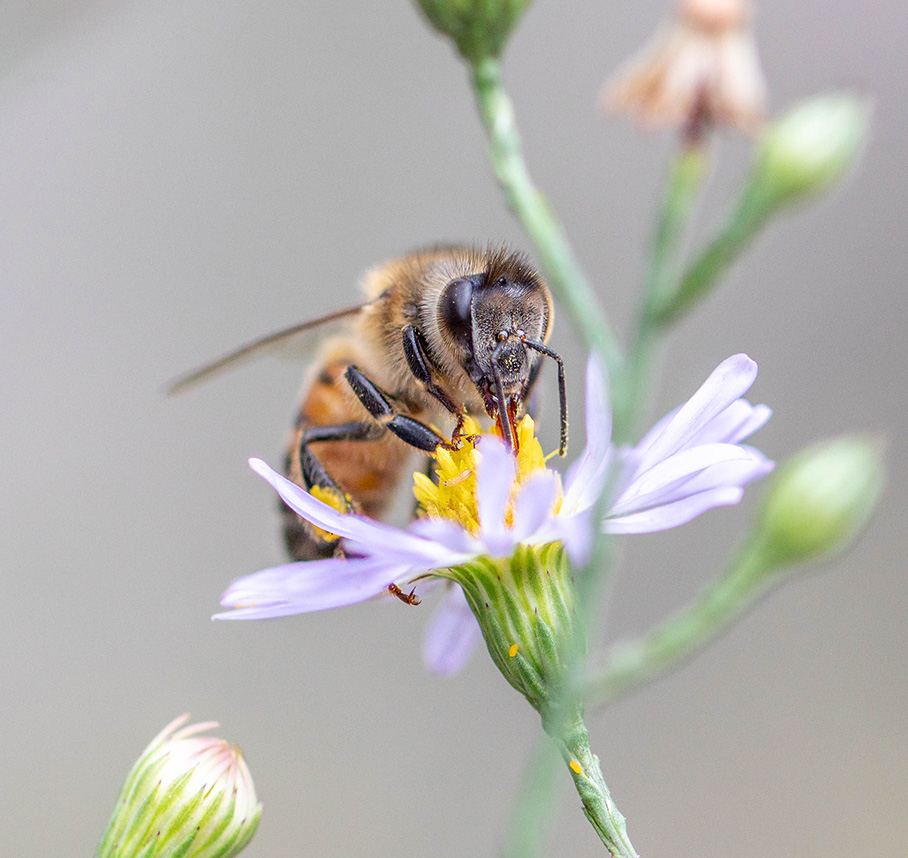
When we think about pollination, we usually view it as a favor: Honey bees buzz from blossom to blossom, helping flowers reproduce and enabling our gardens and agricultural crops to yield fruit. But pollination isn’t a one-way benefit – it is a classic example of mutualism, an ecological interaction in which both the plant and the pollinator benefit.
While some flowers rely on honey bees to transport their pollen, honey bees depend just as heavily on the vital nutrients their colonies need to thrive through the process of pollination. Here is a look at the science of plant-pollinator mutualism and why honey bees need pollination just as much as plants do.
The Science of Mutualism
In nature, mutualism is an interaction between two different species in which both organisms benefit from the interaction. The relationship between flowering plants (angiosperms) and honey bees (Apis mellifera) is one of the most successful mutualisms on the planet.
- What the Plant Gets: Plants are rooted in the ground and cannot move to find a mate. They rely on pollinators to transfer pollen from the male structure (anther) of a flower to the female structure (stigma) of another flower, allowing fertilization and seed production to occur.
- What the Honey Bee Gets: In exchange for acting as unwitting matchmakers, honey bees receive two rich rewards directly from the flower: carbohydrate-rich nectar for energy and nutrient-rich pollen.
All About Pollen
While nectar fuels a honey bee’s flight muscles, pollen provides important nutrients for hive development. Without the pollen collected during pollination trips, a honey bee colony would quickly stall its growth and suffer nutritional deficiencies.
Pollen provides the colony with key nutritional building blocks:
- Protein & Amino Acids: Pollen is the primary source of protein for honey bees. It contains essential amino acids necessary for muscle development, tissue repair and the growth of young worker larvae.
- Lipids & Fatty Acids: Fats obtained from pollen are crucial for energy storage, membrane structure and the production of royal jelly by nurse bees.
- Vitamins & Minerals: Pollen delivers essential micronutrients – including potassium, calcium, magnesium and B-complex vitamins – that support immune function and physiological health throughout the honey bee’s lifespan.
Young nurse bees consume vast quantities of pollen to produce hypopharyngeal gland secretions (royal jelly) to feed the queen and developing brood. Without continuous foraging trips to collect fresh pollen, a hive cannot rear new generations of worker bees.
How Honey Bees Collect Pollen During Pollination
Honey bees are anatomically built to make the most of every pollination visit. As a worker bee lands on various pollinating flowers to drink nectar, her body rubs against the anthers, coating her branched body hairs in thousands of microscopic pollen grains.
To collect this pollen for the hive, she executes a specialized grooming routine:
- She uses specialized brushes on her legs to comb the loose pollen off her body hairs.
- She mixes the pollen with a tiny drop of nectar or saliva to make it sticky.
- She packs the damp pollen tightly into her corbiculae, or pollen baskets, which are
concave structures surrounded by stiff hairs located on her hind legs.
By the time she returns to the hive, she is carrying two bright, bulging pellets of pollen – the direct reward of her pollination efforts.
Different Types of Pollination in Nature
While honey bees are generalist pollinators that visit a wide variety of blooming plants, pollination takes several distinct forms:
- Cross-Pollination (Allogamy): Pollen is transferred from the flower of one plant to a flower on a completely separate plant of the same species. Honey bees contribute to cross-pollination, which promotes healthy genetic diversity in plant populations.
- Self-Pollination (Autogamy): Some plants can self-pollinate when pollen moves from the anther to the stigma on the exact same flower or another flower on the same individual plant.
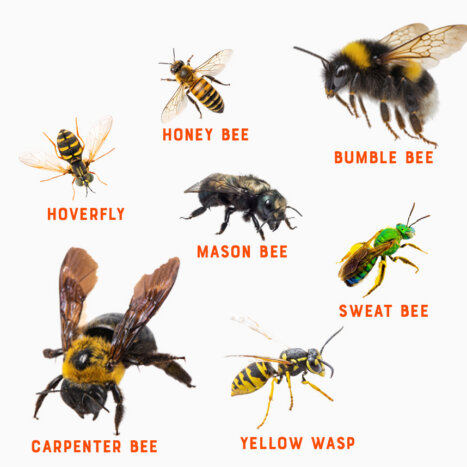
- Buzz Pollination (Sonication): Certain plants – like tomatoes, blueberries and eggplants – release pollen most effectively when certain bees vibrate their flight muscles against the flower. While honey bees do not perform the buzz pollination, other bees (like bumblebees) grab the flower and vibrate their flight muscles at a specific frequency to shake the pollen loose.
- Wind and Water Pollination (abiotic): Not all plants rely on insects. Some plants rely on non-living forces rather than animals. Wind carries pollen for plants such as corn, wheat and pine trees, while some aquatic plants use water-mediated pollen transfer.
A Story of Interdependence
Pollination isn’t just a service honey bees provide to the natural world; it is an evolutionary pact that keeps the honey bees nourished, healthy and growing.
At Nate’s Hives, we celebrate this remarkable partnership every day. Understanding the deep biological connection between flowering plants and healthy hives reminds us just how interconnected our ecosystems really are!
Read MORE