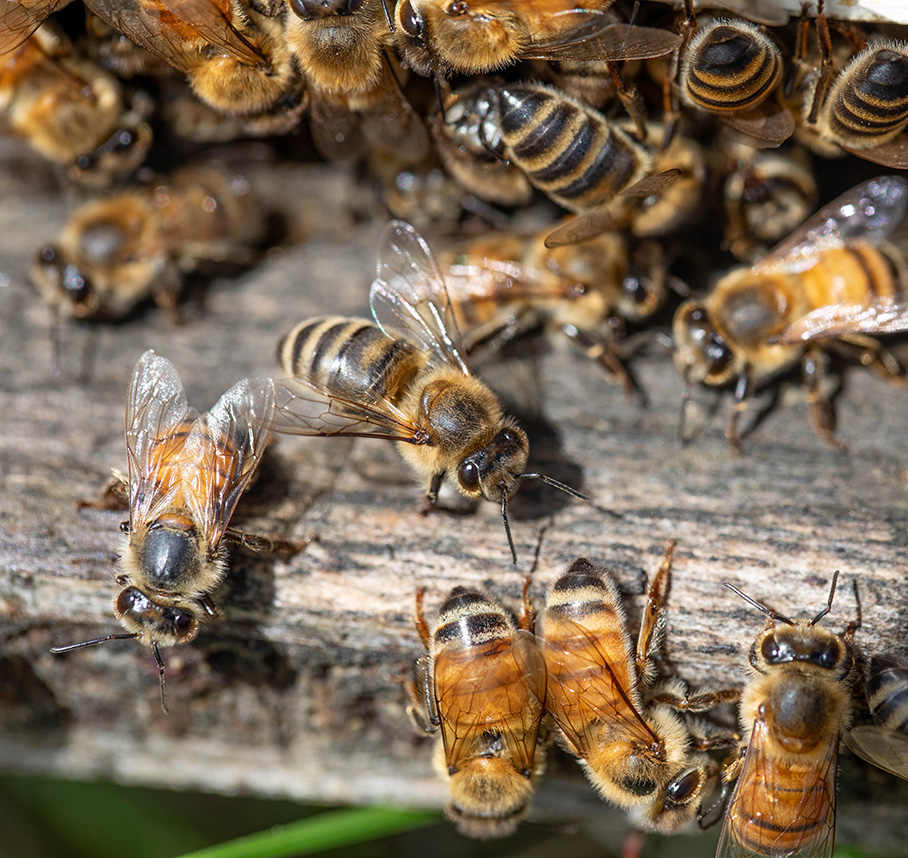
When you open a bright orange bottle of Nate’s 100% Pure, Raw & Unfiltered Honey, you hold the sweet reward of millions of miles of flight. Honey bees are some of the hardest-working creatures we know, but have you ever wondered exactly how far these tiny adventurers travel to bring sweetness back to their hives?
The answer reveals a fascinating world of insect intelligence, community teamwork and a profound connection to nature around us.
Mapping the Flight Plan: The Foraging Range
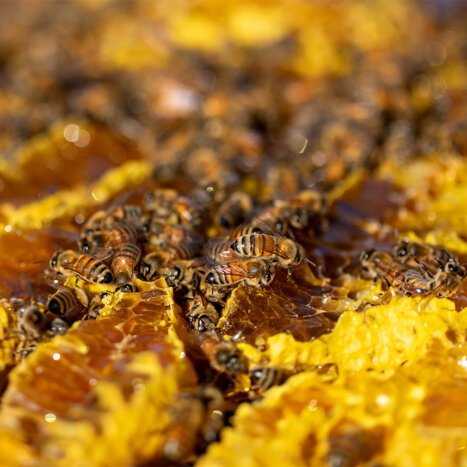
A healthy honey bee colony is a bustling metropolis of 40,000 to 50,000 honey bees. Each year a single colony requires roughly 50 pounds of pollen and 100 pounds of honey to keep the hive thriving, feed the larvae and produce enough honey to survive the year. Any honey produced beyond that 100-pound baseline is what we get to harvest as a delicious honey crop!
To meet these massive nutritional demands, a colony needs access to about an acre-equivalent of attractive blooms.
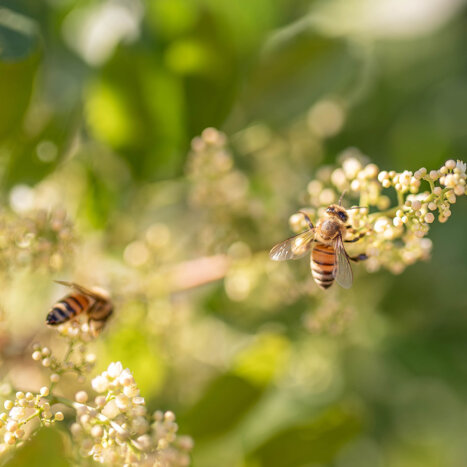
- The Average Radius: Honey bees routinely forage up to 4 miles away from their hive.
- The Foraging Territory: This 4-mile radius means a single hive’s foraging force can cover an astonishing 50-square-mile area!
The All-Natural Specialist Force
A hive’s honey bees don’t all do the same job. In fact, foraging represents the final third of an adult worker bee’s life. After reaching about three weeks old, a honey bee takes orientation flights – in a distinctive, bouncing figure-8 motion to memorize the location of the hive – and officially becomes a field bee.
About one-third of the hive’s population makes up the active foraging force. Those honey bees highly specialize in gathering four vital resources:
| Resource | Purpose | Who Collects It |
|---|---|---|
| Nectar | Crafted into honey for carbohydrate energy | Nectar Foragers |
| Pollen | Processed into bee bread for protein to feed young brood | Pollen Foragers |
| Water | Used to dilute honey, digest food, and cool the hive | Water Foragers |
| Propolis | Bee glue or tree resin used to sanitize and seal the hive | Propolis foragers |
The Science of Specialization
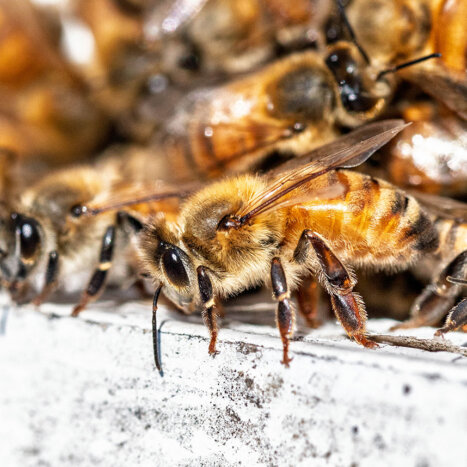
Recent scientific research shows that nectar and pollen foragers actually process resources differently in their brains. Nectar foragers are highly sensitive to sugar, while pollen foragers are uniquely tuned to the chemo-tactile resources of pollen. This specialized focus ensures the colony gathers exactly what it needs, when it needs it. You can even recognize experienced foragers by their tattered wing tips caused by flying deep into dense vegetation.
Why a Diverse Diet Matters
Like humans, honey bees need a varied diet to stay healthy. Recent studies by the USDA Agricultural Research Service (ARS) show that honey bees are significantly more successful when they have access to landscapes with a wide, diverse variety of nectar and pollen sources.
When honey bees forage across a diverse landscape (such as fields rich in clover and alfalfa), they are more than three times more successful than colonies limited to single-crop fields. A diverse diet allows honey bees to produce higher levels of vitellogenin. This crucial compound is the base for royal jelly, prolongs the lifespans of queens and foragers, and boosts the honey bees’ immune systems and antioxidant levels.
The Overlooked Heroes: Water Foragers
While nectar and pollen get all the glory, about 1% of the colony dedicate their lives to water foraging.
Water cannot be stored long-term in the hive, so water collectors must make as many as 46 dangerous trips a day, filling their honey stomachs to carry water that’s nearly double their normal body weight.
Honey bees don’t just drink water; they use it as an all-natural air conditioning system. In the stifling heat of the summer, water receivers spread water over the honeycomb and beat their wings rapidly, using evaporative cooling to keep the delicate brood nest at a perfect 94°F. In the winter and spring, they use water to dissolve crystallized honey and thin out dry food for the baby honey bees.
- Fun Bee Fact: You might think honey bees would look for the cleanest, most pristine water source possible, but they prefer it with a bit of natural buildup from soil and plants. Their antennae are highly tuned to the strong scents of puddles, ponds and brackish water. To a honey bee, that murky water is like a health shake – it’s packed with essential minerals like sodium and magnesium that help a growing brood thrive.
How You Can Help
Because demand for natural honey bee forage often exceeds what is available, we can all support our local pollinators. Here is how you can create a bee-friendly haven in your own backyard:
- Plant for Variety: Fill your garden with a diverse array of pollinator-friendly plants to give honey bees and other pollinators a robust, vitamin-rich diet.
- Set Up a Bee Watering Station: Place a shallow birdbath or container filled with rainwater, and add black pebbles or marbles so honey bees have a safe place to land without the risk of drowning.
- Keep it Steady: Bees are creatures of habit. Once they find a reliable flower or water source, they will communicate it to the colony using their famous waggle dance and return to it daily!
By supporting our fuzzy neighbors’ incredible foraging zone, we help protect the health of the hives that sweeten our world.
Read MORE