We all know bees make honey, but the journey from a drop of floral nectar to the sweet, thick golden liquid in your pantry is a genuinely mind-blowing process. It’s equal parts teamwork, specialized biology and micro-chemistry.
While it looks simple from the outside, turning nectar into honey requires an incredible assembly line inside and outside the hive. Here is a step-by-step look at how honey bees turn nectar from a simple flower into liquid gold.
Step 1: Nectar Collection & the “Honey Stomach”
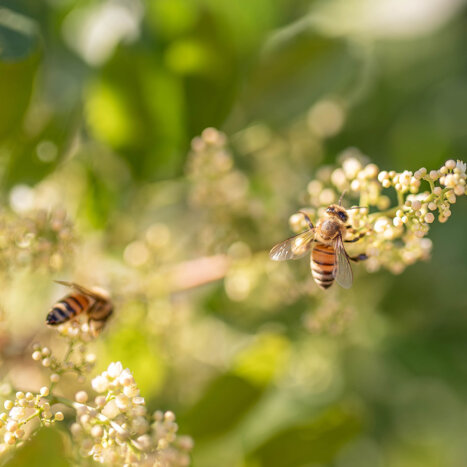
It all begins out in the field. Older worker bees, called foragers, fly from flower to flower, using their straw-like tongues (proboscis) to drink up liquid nectar. Unlike other foods, this nectar doesn’t go into the bee’s normal digestive stomach. Instead, honey bees have a dedicated second organ called a honey stomach (or crop).
- How It Works: Think of the honey stomach as a specialized biological backpack. It sits right in front of the bee’s digestive tract, separated by a tiny, one-way valve called the proventriculus.
- The Barrier: This valve keeps the nectar separate from the honey bee’s own digestive system, preventing her from digesting the raw materials.
- Chemical Magic Begins: While the nectar sits in this crop, the honey bee’s glands secrete special enzymes – most notably invertase. Invertase begins breaking down the complex sucrose in raw nectar into simpler sugars: fructose and glucose.
A fully loaded honey stomach can weigh nearly as much as the bee herself. Once she’s full, she flies straight back home.
Step 2: Handing Off Nectar
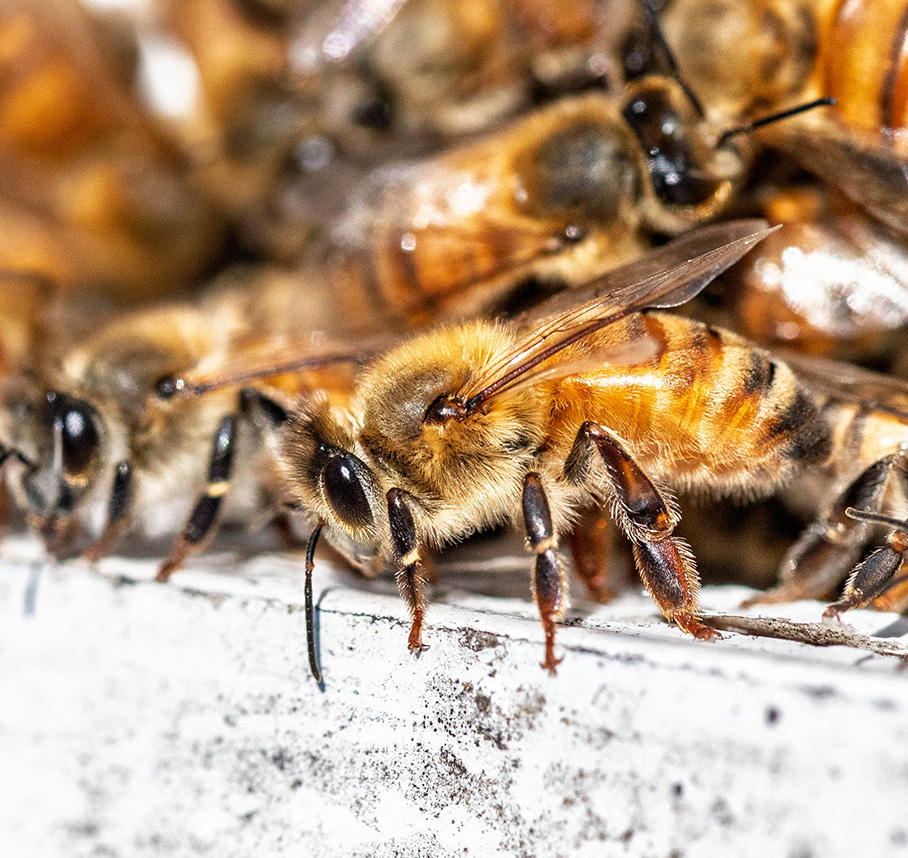
When the forager arrives back at the entrance of the hive, she doesn’t just dump the nectar into a honeycomb cell and head back out. Instead, she passes it off to younger house bees waiting inside. This isn’t just a physical handoff – it’s a crucial chemical step. As the nectar passes from honey bee to honey bee, each house bee adds more enzymes from her own glands. This processing may continue through multiple exchanges, constantly refining and breaking down the complex sugars into simpler, long-lasting forms.
Step 3: Evaporation & Fanning (Lowering the Moisture)
Raw flower nectar is mostly water – usually around 70% to 80% moisture. If honey bees stored it like that, wild yeast would cause the nectar to ferment and spoil almost immediately. Mature honey typically needs to have a moisture content under 18%, helping it resist fermentation and remain shelf stable.
To dry out the nectar, the honey bees get to work evaporating the excess water:
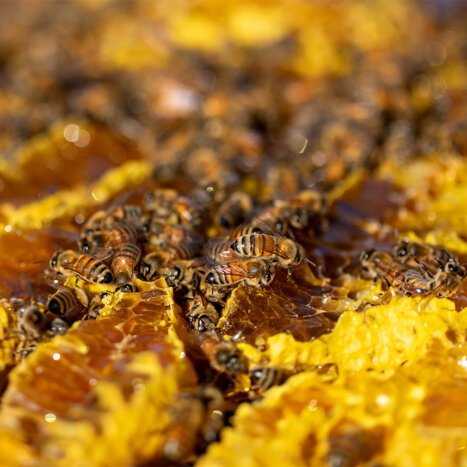
- First, house bees deposit thin droplets of the processed nectar across the walls of open wax honeycomb cells to maximize surface area.
- Next, groups of honey bees line up throughout the hive and beat their wings at incredible speeds – up to 230 times per second!
- This wing-fanning creates a powerful wind tunnel effect through the hive, pulling warm, dry air across the comb and fanning humid air right out the entrance.
As the water evaporates, the thin nectar thickens into the rich substance we recognize as honey.
Step 4: Sealing the Deal with a Wax Cap
Once the moisture level drops below 18%, the honey is officially ripe and shelf stable. To preserve it for the winter months ahead, the honey bees give it a permanent seal.
This is where the wax cap comes in:
- Where does wax come from? Honey bees don’t collect wax from nature – they make it internally! Young worker bees have eight specialized wax glands on the underside of their abdomens. These glands convert the natural sugars from honey into tiny, translucent wax scales that harden after being secreted.
- The honey bees scrape the wax flakes off their bellies with their legs, pass them up to their mandibles (jaws) and chew them until the wax becomes pliable.
- They carefully mold this fresh wax over the top of each filled cell, creating an airtight, waterproof seal. Under this cap, honey can remain stable for decades when stored properly. Honey has even been discovered centuries later in an unspoiled state.
Why Does Some Honey Taste Different?
If you’ve ever noticed that some honeys stay liquid for months while others turn cloudy and harden (crystallize) quickly, you’re seeing chemistry in action. All honey is made primarily of two natural sugars: fructose and glucose. However, the exact ratio of fructose to glucose depends entirely on the type of flowers the honey bees visited:
- High-Fructose Honeys: Nectar from plants like Acacia, Tupelo, and Black Locust contains significantly more fructose than glucose and stays liquid, clear, and smooth for a longer time.
- High-Glucose Honeys: Nectar from plants like Clover, Canola, and Dandelion has a much higher concentration of glucose and naturally wants to bind into solid crystals. That’s why honey rich in glucose may crystallize much faster, producing a thicker, creamier texture.
The Ultimate Team Effort
It takes thousands of honey bees traveling millions of miles to make a single pound of honey. From the specialized crop organ to the precise humidity control inside the hive, honey making is proof of just how brilliant these tiny creatures are.
At Nate’s Hives, we never take that hard work for granted. Understanding the science and teamwork behind honey production deepens our appreciation for both honey bees and the remarkable process that transforms nectar into honey.
Read MORE