When you think of the hive, your mind probably jumps straight to honey – that delicious, golden sweetness. But honey bees create another substance that is just as miraculous and essential to the colony’s survival: beeswax.
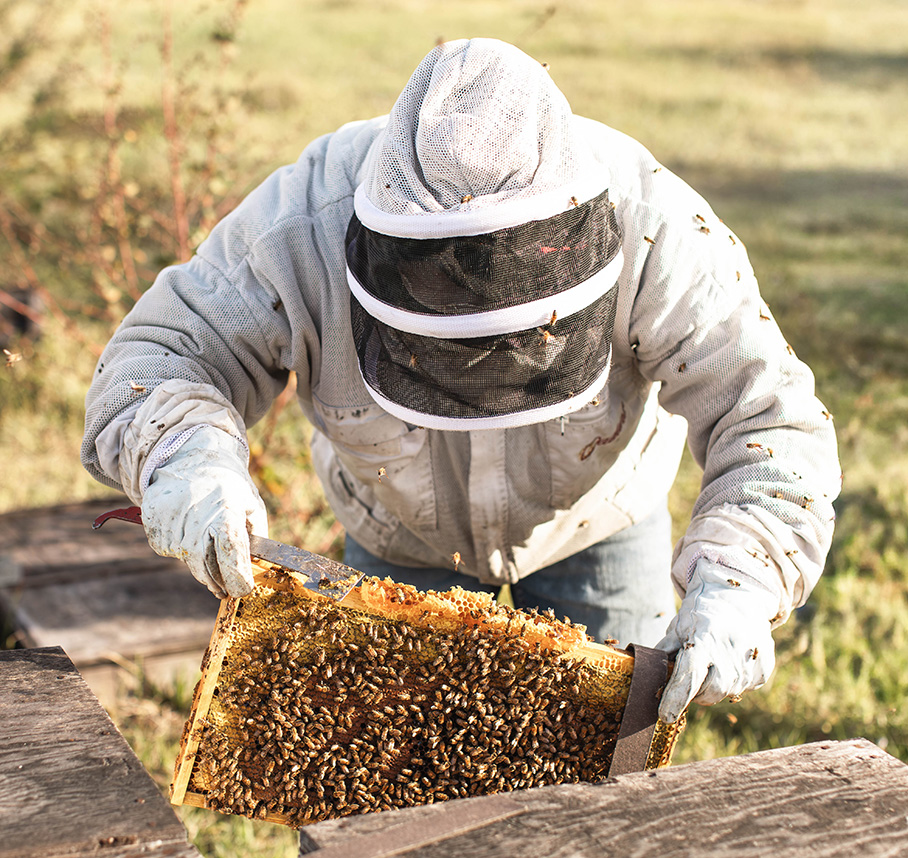
Beeswax is a natural wax created entirely by honey bees. It is the basic building block of the honeycomb, a structure that has fascinated natural philosophers and mathematicians for centuries due to its perfect, efficient design.
How the Worker Bee Creates Wax
Beeswax is not collected; it is produced directly by the worker bee. The wax is formed by eight wax-producing glands located on the underside of the worker bee’s abdomen.
To produce wax, the worker bee must consume a significant amount of honey (roughly 8-10 pounds of honey for one pound of wax). The sugars are metabolized, and the wax is excreted as small, white flakes from the abdominal glands. Worker bees then chew and shape these flakes using their mandibles to build the comb.
The Honeycomb Mystery
The honeycomb is often referred to as the most studied natural cellular structure. While its final shape is the familiar rounded hexagon, the process of construction is a fascinating feat of physics and heat.
- Birth of a cell: A fresh honeycomb cell begins its life as a circular shape at “birth.”
- The transformation: The cells quickly transform into the familiar rounded hexagonal shape while the comb is being built. The worker bees – often called heater bees or nurse bees – apply heat (around 45°C) to the wax near the junction points of the neighboring circular cells.
- The physics: This heat melts the wax, causing the visco-elastic wax to flow. As the cell walls fuse together, they progressively straighten to minimize the surface energy, resulting in the incredibly efficient hexagonal pattern. This ensures maximum storage space with minimum wax consumption.
The Critical Role of Wax in the Hive
Beeswax is the structural foundation for the entire colony, acting as the storage vessel and nursery for the next generation.
- The Super-Efficient Nursery: Some of these hexagonal cells serve as the bee hive’s nursery, where the queen lays her eggs and the young brood (larvae and pupae) develop.
- The Storage Vault: The cells are used to store all the bee hive’s vital resources:
Honey: The colony’s primary carbohydrate and energy source
Bee Bread: The fermented pollen mixture that serves as the colony’s protein source
Uses for Beeswax
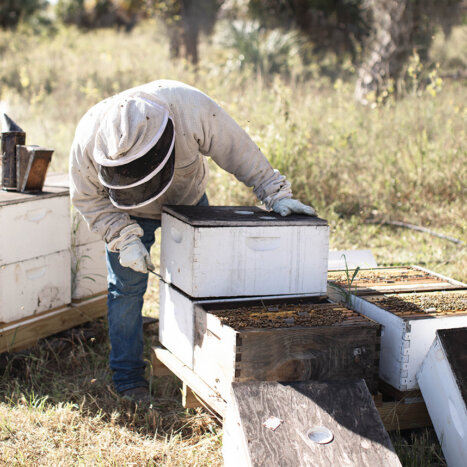
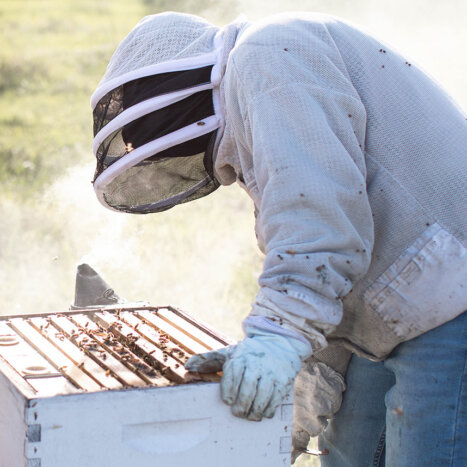
While the structural integrity of the comb is vital for the colony, the purity and durability of beeswax make it highly valuable for human use. Beekeepers carefully harvest the excess wax alongside the honey.
Beeswax is a common ingredient in thousands of products, offering eco-friendly solutions for kitchen, wellness, home and crafts:
- Food prep: Used as a coating for cheeses or to line baking tins
- Skincare and cosmetics: Used in lip balms, lotions, creams and salves for its natural moisturizing and protective barrier properties
- Home and craft: Essential for making natural, slow-burning candles, for old furniture joints or to help smooth movement for doors and windows
The next time you enjoy the sweet flavor of Nate’s Honey, remember the miraculous, intricate structure that held it – the pure beeswax created by the colony for survival and used by people for nearly endless applications.
Read MORE