When you hear the word sommelier, you probably think of fine wines and fancy restaurants. But did you know there is an equally specialized world dedicated entirely to honey? Enter the honey sommelier.
Just as a wine sommelier spends years studying vineyards, grape varieties and flavor notes, a certified honey sommelier is an expert in the origins, aromas and distinct profiles of honey from around the globe. Leading this movement in the United States is Marina Marchese – founder of the American Honey Tasting Society (AHTS) and the first U.S. citizen to complete the rigorous certification requirements at the Italian National Register of Experts in the Sensory Analysis of Honey.
Through her work, she’s helping food lovers, chefs and beekeepers rethink what honey actually is. Not just a pantry staple but an extraordinary culinary ingredient shaped by soil, climate and floral source.
What Is Sensory Analysis?
So, how does someone actually evaluate honey like a pro? It goes far beyond simply asking, “Is this sweet?” Certified honey tasting relies on Sensory Analysis – a structured scientific method used to judge food through sight, smell, taste and texture.
When a honey sommelier evaluates a sample, they follow a deliberate routine:
- Visual Assessment: Holding the glass up to light to judge color, clarity and viscosity – noting whether it is between water-white and deep dark amber
- Olfactory (the aroma): Smelling the honey both at room temperature and when slightly warmed. One might catch scents of fresh hay, warm butter, damp wood or bright citrus.
- Gustatory & Texture (taste and mouthfeel): Letting a small spoonful melt across the tongue, this reveals the balance of sweet and sour/acidic, how quickly it dissolves and whether the mouthfeel is smooth, buttery or granular.
This systematic approach allows experts to evaluate quality and map the diverse flavor profiles found with both varietal and blended honeys.
Varietal, Blended & Flavored Honeys
Walk down a grocery aisle, and you’ll see jars labeled “Hot Honey,” “Cinnamon Honey” and “Buckwheat Honey.” It’s easy to lump them together, but there is a major difference between honey varietals and flavored honeys:
- Honey Varietals: This monofloral honey is made by honey bees foraging primarily on one specific flower blossom – like Sourwood, Tupelo or Buckwheat. The distinctive flavor, color, and aroma come mainly from the nectar from one predominant floral source.
- Blended Honey: Rather than being mainly from a single floral source, blended honey combines the characteristics of multiple nectar sources. By bringing together different varietal honeys, honey experts create a balanced flavor profile that showcases the complexity of many flowers involved.
- Flavored (Infused) Honey: Starts with a base honey (often a light, neutral-tasting honey) that has ingredients added to it after harvest. Think of hot peppers for spicy hot honey, cinnamon for breakfast honey or lemon for sweetening your drinks. Though delicious, the flavor is enhanced by the added ingredients to perfectly accentuate the honey.
The Honey in Your Pantry
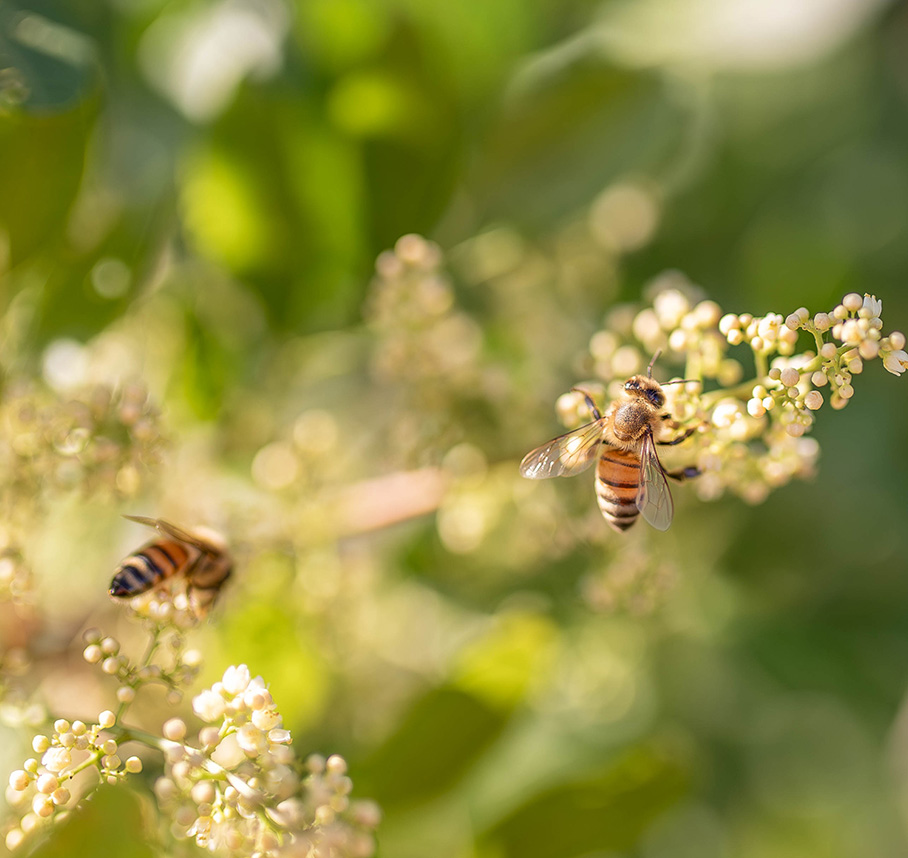
The remarkable diversity of honey begins with the many flowers honey bees visit. Each floral source can contribute its own unique flavor, aroma and color characteristics, creating the wide range of honey varietals found around the world. These varietals are interesting taste experiences on their own, and they serve as the basis for many blended honeys, where different varietal characteristics are intentionally combined to create balanced, mild flavor profiles. By bringing together the best qualities of multiple nectar sources, blended honeys offer the consistency, versatility and enjoyable taste that many consumers enjoy every day.
A New Way to Experience Honey
The next time you open a bottle of pure honey, treat it a little more like a fine wine. Take a moment to look at its shade, take in its aroma and enjoy all the hints of flavors.
At Nate’s Hives, we have great respect for the incredible variety that nature and honey bees produce. Celebrating all honey and the science of sensory analysis reminds us just how rich – and deliciously complex – the world of pollinators really is.
Read MORE