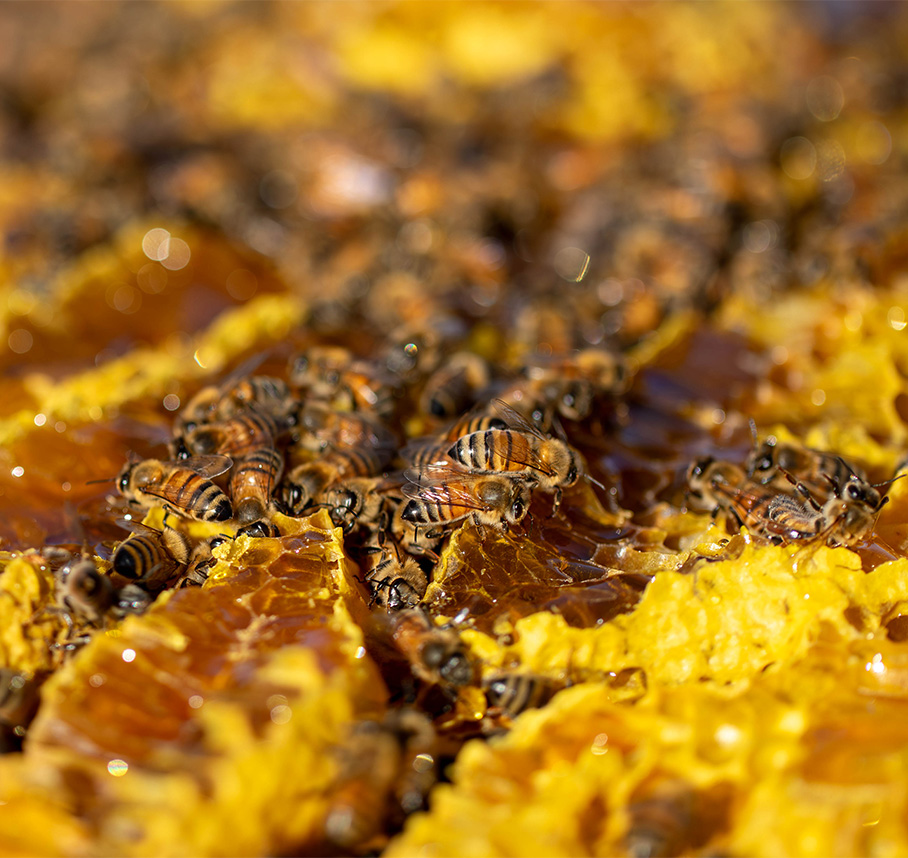
For us, honey is a sweet treat that enhances everything from breakfast to dessert, but for a colony of honey bees, it’s essential fuel for a healthy, thriving hive.
Honey bees put an incredible amount of work into gathering nectar and transforming it into honey. This valuable food supply gives the colony the energy it needs to stay active, care for the hive and make it through seasons when flowers are harder to find.
To understand why bees make honey, you have to look at the overall nutrition of the hive – and how different honey bees rely on different food sources to do their jobs.
The Honey Bee Diet
For a hive to continue thriving, honey bees rely on two primary food sources: honey for carbohydrates and pollen for protein and other important nutrients. Research shows that balancing these fuel sources is essential for everything from brood rearing to winter survival.
- Honey is the carbohydrate (energy) source for honey bees. Made from floral nectar, honey is packed with simple sugars – mostly fructose and glucose. It provides the quick-burning fuel honey bees need to fly, build wax comb, fan their wings and keep the hive clean.
- Pollen is their protein and fat source. While honey provides raw energy, pollen supplies the structural building blocks: amino acids, lipids, vitamins and minerals needed to raise young honey bees and build strong bodies.
Without honey, worker bees would rapidly run out of the physical energy needed to forage for pollen, defend the nest, or care for the queen.
Winter Survival for Honey Bees
The biggest reason honey bees store so much excess honey is to survive the winter.
Unlike many other insects – like bumblebees or wasps, where only the queen survives the cold months by hibernating underground – honey bees stay active inside their hive all winter long. They gather in a tight mass called a winter cluster.
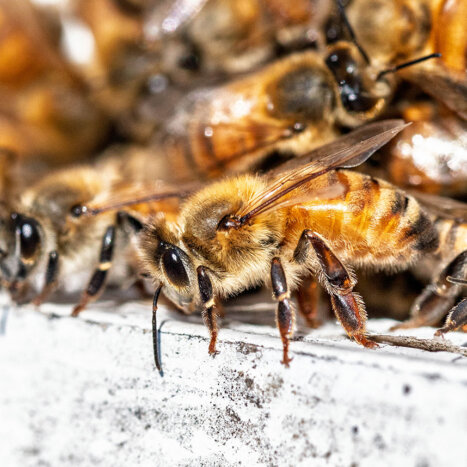
To keep the center of the cluster warm (usually around 91°F to 95°F, even when it’s freezing outside), the worker bees continuously flex their flight muscles without moving their wings. This muscle activity generates heat, much like how shivering warms up a human body.
Generating that kind of heat takes a massive amount of energy. In fact, a healthy colony can consume 30 to 80 pounds of honey over a single winter just to prevent freezing.!
Raising the Next Generation of Honey Bees
Honey also plays a direct role in feeding the youngest members of the colony, though larval bees don’t just eat plain honey straight out of the comb. Instead, worker bees process hive nutrients into specialized larval foods:
- Royal Jelly: Young nurse bees consume large amounts of pollen and other hive food resources, which support their hypopharyngeal glands that produce a dense, nutrient-rich secretion known as royal jelly. All larvae eat royal jelly for their first three days, but larvae chosen to become queens are fed unlimited amounts throughout their development.
- Bee Bread: For future worker bees and drones, nurse bees transition their diet after day three to “bee bread.” This is a fermented mixture of pollen, honey or nectar, and bee-derived enzymes that is stored in comb cells as an important food resource for the colony.
Fueling the Flight Muscles
Out in the field, foraging worker bees have incredible energy demands. A single worker bee beats her wings about 230 times per second. To sustain that level of output, her flight muscles require a constant stream of simple sugars.
Before leaving the hive on a foraging trip, a worker bee consumes a small amount of honey to fuel her flight to the flower fields and back home.
A Labor of Love
When you look at everything it takes to keep a hive running – from raising larvae to surviving sub-zero winter temperatures – it’s clear that honey is the ultimate survival fuel.
Honey bees invest significant time and energy in making honey, highlighting the important role it plays in feeding and sustaining the colony. At Nate’s Hives, we understand a strong honey supply is needed for a healthy hive and are committed to making sure the nutritional needs of our honey bees always come first.
Read MORE