At Nate’s Hives, we often talk about the relentless quality of our Nate’s Honey, but that quality isn’t just about taste. It is rooted in the complex, natural chemistry of the honey bee hive. While many people think of honey as a simple sweetener, it is actually one of nature’s most sophisticated examples of antimicrobial defense.
To understand how we maintain the purity and shelf-stable nature of Nate’s Honey, we have to look at the unique inhibitors that honey bees pack into every drop.
The Anatomy of Honey’s Antimicrobial Activity
Antimicrobial is an umbrella term for any substance that inhibits or kills microbes. Honey is a complex substance containing between 180 and 200 different components. Its ability to remain unspoiled for years is due to a synergistic cocktail of natural properties that creates an environment that inhibits the growth of many microorganisms, like bacteria.
- Low Water Activity and High Sugar
Honey is roughly 80% sugar and only 17-20% water. This creates high osmotic pressure. In simple terms, because there is so little free water available, honey actually draws water out of bacterial cells through osmosis. When a bacterium loses its internal moisture to the honey, it shrivels and dies – a process known as dehydration. - Acidity (Low pH)
Most bacteria thrive in neutral environments (pH 6.5 to 7.5). Honey, however, is naturally acidic, typically ranging from a pH of 3.2 to 4.5. This acidity is largely due to gluconic acid, which is produced when honey bees add enzyme glucose oxidase to the nectar. This low-pH environment acts as a chemical barrier that inhibits the growth of many pathogenic organisms. - Hydrogen Peroxide (H2O2)
One of the most potent weapons in honey’s arsenal is Hydrogen Peroxide (H2O2). This is produced enzymatically when the enzyme glucose oxidase interacts with glucose in the presence of oxygen. - Bee Defensin-1
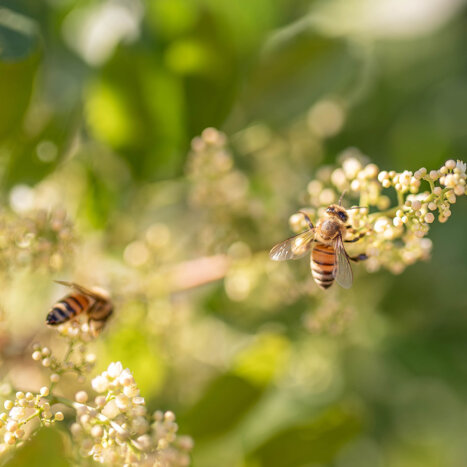
Honey bees add a specific protein called Bee Defensin-1 to honey. This is an antimicrobial peptide that acts as part of the honey bee’s own immune system. It works primarily against bacteria by creating pores in the bacterial cell membrane, effectively “popping” the cell.
The Manuka Exception: Non-Peroxide Activity
While most honeys rely on Hydrogen Peroxide, some varieties (most notably Manuka honey) possess non-peroxide activity. Even if you remove the peroxide, research shows Manuka honey remains a potent antimicrobial due to a compound called Methylglyoxal (MGO).
MGO is highly reactive and has the unique ability to alter the structure of bacterial fimbriae and flagella (the tails bacteria use to move and stick to surfaces). By neutralizing these structures, MGO prevents bacteria from adhering and forming biofilms – the protective slime layers that make infections difficult to treat.
Synergy and the Future of Honey
What makes honey truly remarkable is that, unlike many lab-created antibiotics, some research shows bacteria are far less likely to develop resistance to honey. This likely is because honey doesn’t use a single silver bullet approach; it uses a combination of high sugar, low pH, H2O2 (or MGO) and various phytochemicals (like polyphenols) that work together.
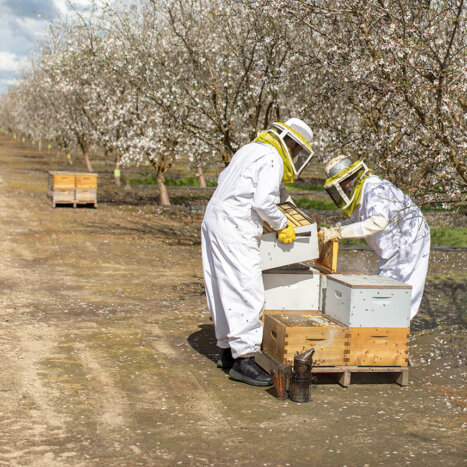
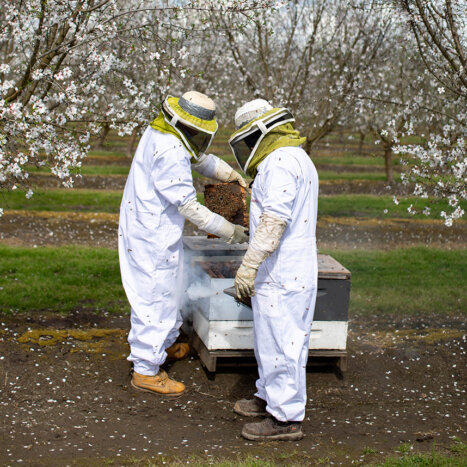
At Nate’s Hives, we manage more 120,000 colonies with a focus on preserving these natural properties. By maintaining the health of the honey bee hive and ensuring minimal processing, we ensure that every bottle of Nate’s Honey retains the incredible biological complexity that nature intended.
Read MORE