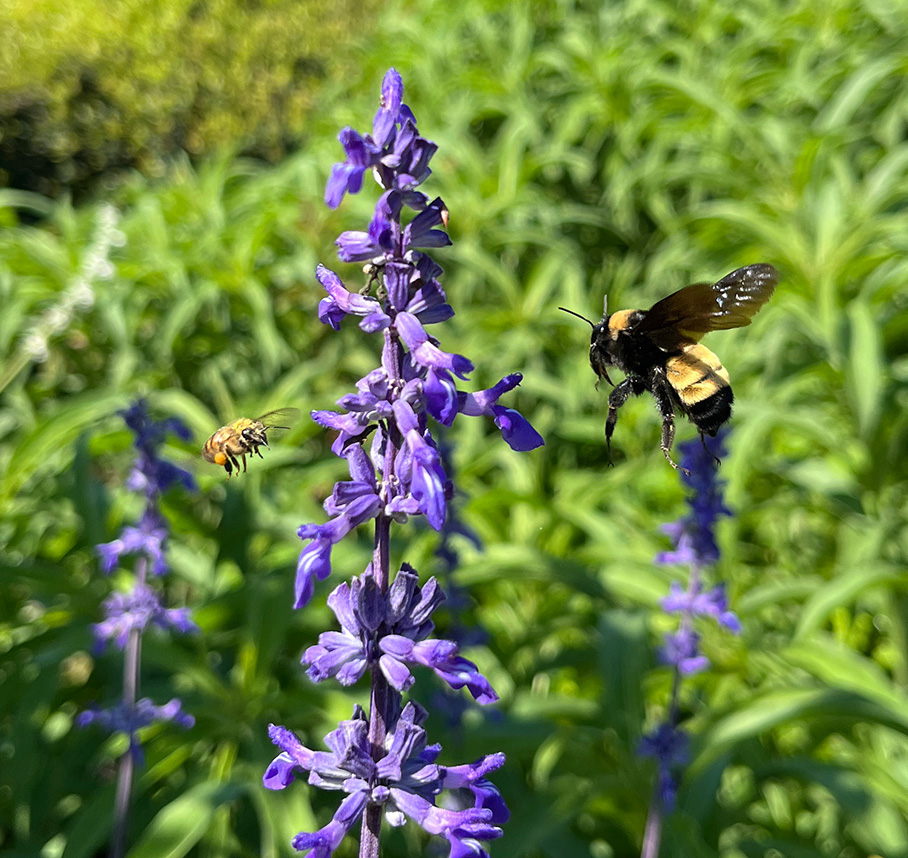
In March, the Washington State Department of Agriculture’s (WSDA) Washington Bee Atlas (WABA) reached a major milestone for pollinator conservation: identifying 17 never-before recorded in Washington, along with 13 rare bee species. These discoveries, along with continued research, are essential for understanding how changing environmental conditions affect native bee populations and uncovering what remains unknown about their range and health.
The health of native bee ecosystems is not only a measure of the wellbeing of individual species but an important indicator of long-term food security. While honey bees play a vital role in agriculture, they cannot effectively pollinate every crop on their own. A strong and diverse pollinator community helps support balanced ecosystems, but that balance can be disrupted when species face pressures such as habitat loss, environmental change or disease.
What Is a Melittologist?
Pollinator conservation efforts rely on specialized volunteers and academics trained to study bee biology, ecology, behavior and species diversity. These individuals are known as melittologists, and their work can support both academic research and broader scientific efforts. While some pursue formal education in bee-related fields, others can build this expertise through dedicated training and hands-on experience.
Both professional research and community involvement play an important role in tracking bee populations as ecosystems change. Citizen scientists continue to contribute valuable knowledge and field observations to research programs like WABA, helping expand what scientists know about native pollinators across the state.
The Importance of Biodiversity
Bees contribute to roughly one-third of the food we eat. When pollinator diversity declines, ecosystems become less resilient, crop yields can suffer and food systems face greater disruption. Collecting data to support scientific research and conservation planning is essential – not only for agriculture but for understanding where different species live and how that’s changing over time. That knowledge helps guide restoration efforts, including ecoregion-specific seed mixes and planting recommendations.
Responsible Land Management
Supporting pollinators can start in our own yards and gardens, but long-term conservation also depends on partnerships across public lands. These spaces provide thousands of acres where efforts such as planting native vegetation and reducing pesticide use can make a meaningful difference. The integration of scientific data into land management practices results in more-informed decisions and stronger outcomes for pollinator health.
Building a connected network of conservation efforts across agencies also helps raise awareness and supports a more balanced approach – one where agricultural production, scientific priorities and ecosystem health can exist together sustainably.
Looking Ahead
This WSDA discovery reinforces the need for continued investment in research, citizen science and conservation programs. At Nate’s Hives, our honey bees forage on responsibly managed natural landscapes that support both agriculture and long-term ecosystem health. Nate’s Honey is a reflection of that commitment, resulting in a 100% pure, raw & unfiltered product.
Ultimately, protecting bees is about more than safeguarding a single group of insects. It is about preserving the interconnected systems that support our food supply, our ecosystems and our long-term resilience.
Read MORE