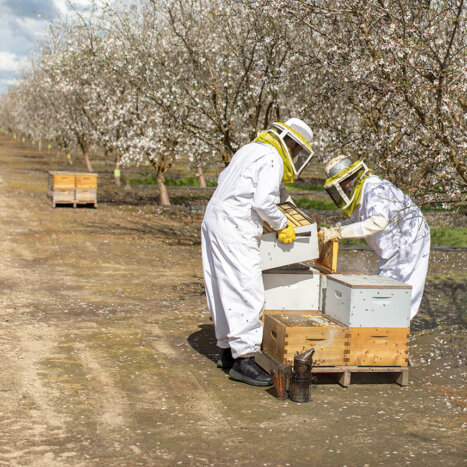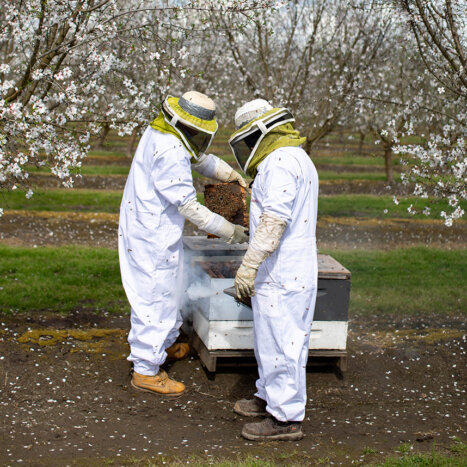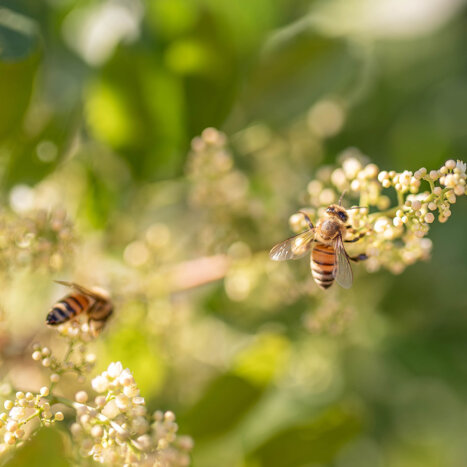
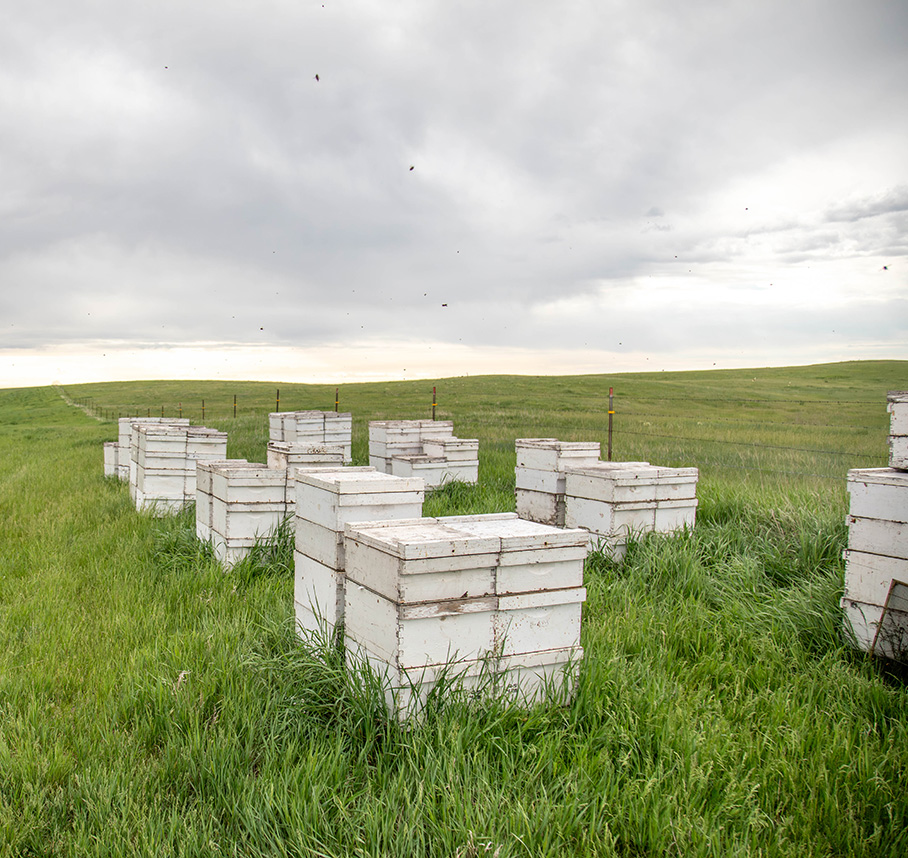
Visit the vibrant, sun-drenched valleys where our beekeepers tend to their honey bee colonies, and you will find an ecosystem buzzing with hidden complexity. At Nate’s Hives, providing 100% pure, raw and unfiltered honey means looking far beyond the hive itself. It requires investment in the land, flora and natural forage that keep our honey bees thriving.
To lead this mission, our dedicated team at Nate’s Hives relies on world-class agricultural science. Dr. Suresh Bhamidimarri, our Vice President of Agricultural Research & Development, spearheads our forage improvement initiatives. With a doctorate in plant breeding and genetics and more than 20 years of agriscience experience, Bhamidimarri bridges the gap between plant biology and honey bee health. He heads the first full-time, in-house R&D team in the U.S. honey industry dedicated solely to studying how plants, blooms and honey bees interact.
One of the most fascinating relationships Bhamidimarri and his team are currently exploring involves alfalfa.
The Power of Alfalfa
Alfalfa isn’t just an ordinary farm crop; it is widely considered the queen of the forages. Ranking as the fourth most valuable field crop in the United States, it is the ultimate high-protein feed for dairy cows, horses and livestock.
Beyond its nutritional density, alfalfa provides year-round ground cover that prevents topsoil erosion, improves water penetration and naturally fixes around 300 pounds of nitrogen per acre into the soil – reducing the need for fertilizers.
For beekeepers, alfalfa fields are an incredible potential source of rich, abundant nectar. However, there is a catch: Honey bees are notoriously reluctant to pollinate it.
The Flower that Slaps Back
Honey bees avoid pollinating alfalfa because of a botanical defense known as the tripping mechanism.
An alfalfa flower keeps its reproductive organs tucked tightly under tension inside its bottom petals. When a honey bee forces its way inside to reach the nectar, the flower spring-loads (“trips”) open. Instantly, the male stamens snap forward and whack the honey bee on the head, to depositing pollen.
While this mechanical slap successfully transfers pollen, honey bees are jarred by it. In fact, after getting struck a few times, they learn to bypass the system entirely. They begin foraging through the back door – chewing holes or sneaking into the side of the flower to steal the nectar without tripping the mechanism. While the honey bees get their sweet carbohydrate reward, no pollination occurs, leaving the alfalfa crop unable to produce seeds.
The Leafcutter Partnership
This is where Dr. Bhamidimarri’s research and a unique scientific hypothesis come into play. Enter the alfalfa leafcutter bee (Megachile rotundata). Unlike the cautious honey bee, the smaller leafcutter bee doesn’t mind getting hit on the head; they happily trip virgin alfalfa flowers all day long, making them the premier commercial pollinators for the crop.
Our researchers are exploring a compelling question: Can honey bees learn to work with leafcutter bees to maximize forage efficiency?
The hypothesis suggests that when honey bees arrive in fields previously visited by leaf cutter bees, the flowers’ “traps” have already been sprung. Free from the threat of a blow to the head, the honey bees can safely forage on the open flowers, collecting massive amounts of high-quality nectar without stress. Over time, this cooperative environmental setup could allow honey bees to comfortably utilize large landscapes of alfalfa that they otherwise would avoid.
Healthy Futures for Honey Bees and Agriculture
“Research begins with respect for nature,” Bhamidimarri notes. “When we understand how honey bees and their environment work together, everything we produce becomes a little more meaningful.”
By studying unique multi-species partnerships, Nate’s Hives continues to pioneer sustainable agricultural practices that protect our pollinators and support local farmers.
Read MORE