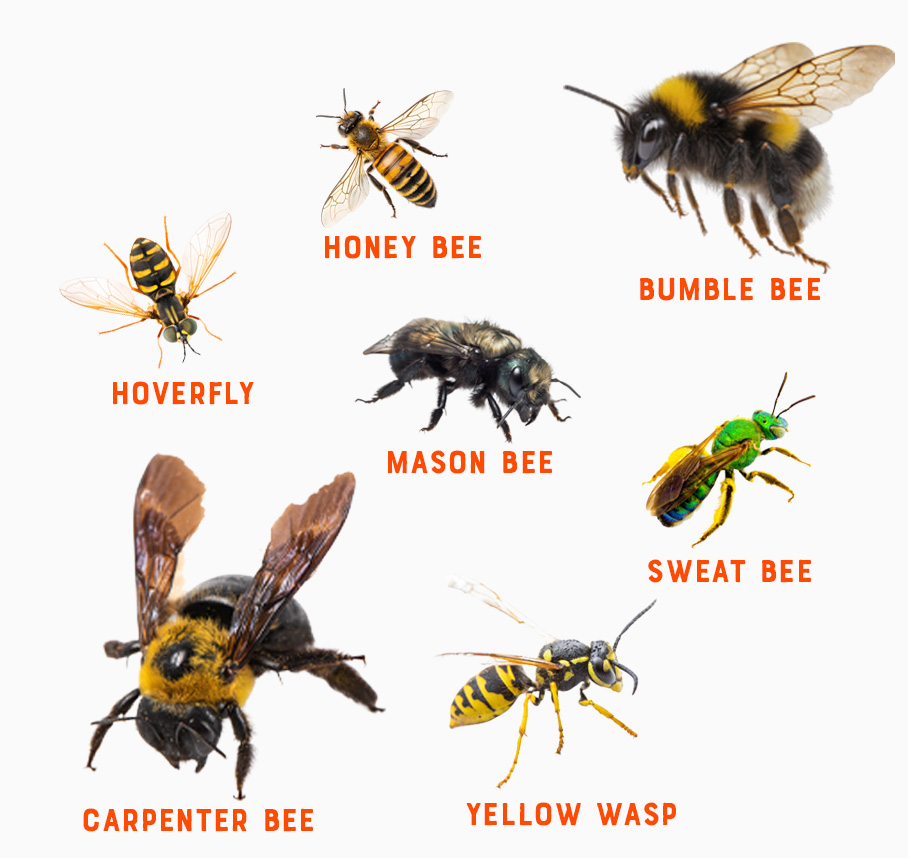
A buzzing visitor in your garden might look like a honey bee at first glance – but a closer look can reveal a different insect altogether. From familiar stripes to fuzzy bodies, honey bees and their lookalikes share features that can make them tricky to tell apart.
From fuzzy flies to striped solitary bees, nature is full of master pretenders. Learning how to tell them apart isn’t just a fun trick – it’s a great treat for anyone who wants to better understand the pollinators buzzing around their neighborhood!
Here is your field guide to identifying honey bees and unmasking their most common lookalikes.
What Does a Real Honey Bee Look Like?
Before we unmask the imposters, let’s look at the classic look and behavior of a genuine honey bee (Apis mellifera).
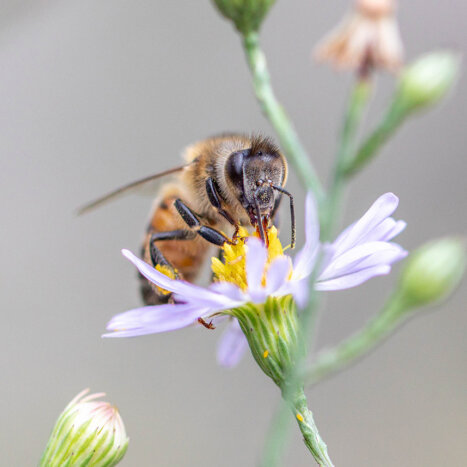
- Appearance: Honey bees are slender, golden-brown to amber in color, with subtle black bands across their abdomens. They are covered in fine, branched hairs designed to trap pollen, giving them a soft, velvet-like look rather than a shiny gloss.
- Pollen Baskets (Corbiculae): Look closely at a female worker honey bee’s hind legs. When she’s foraging, you’ll usually see shiny, packed balls of pollen tucked neatly into smooth concavities on her legs.
- Foraging & Nesting: Honey bees are social creatures living in large, permanent colonies housed in hives or protected cavities like hollow trees. In the garden, they move systematically from flower to flower, focused entirely on gathering nectar and pollen to store away for their hive.
Unmasking the Lookalikes
1. The Drone Fly (Hoverfly)
- The Look: Drone flies are hoverflies that have evolved through a survival trick called Batesian mimicry. By copying the golden-and-black striping of a honey bee, they trick predators into thinking they have a painful sting!
- How to Identify Them: Look at the eyes and wings! Flies have massive eyes near the top of their head, whereas honey bee eyes sit on the sides. Also, flies have only two wings, while honey bees have four wings hooked together in pairs. Hoverflies can hover remarkably still in the air like tiny helicopters before darting away, a distinctive flight pattern that can help give away their disguise.
2. Bumblebees
- The Look: Bumblebees wear a similar black-and-yellow striped pattern, but they look like they’re wearing heavy winter coats!
- How to Identify Them: Bumblebees are significantly larger, rounder and much fuzzier than honey bees. While honey bees live in massive perennial colonies of tens of thousands, bumblebee nests are small annual ground nests (often under leaf piles or old rodent burrows) or other sheltered cavities above ground (like hay bales or birdhouses) housing just a few hundred bumblebees.
3. Carpenter Bees
- The Look: At a glance, carpenter bees look almost identical to large bumblebees or oversized honey bees.
- How to Identify Them: Check out their backsides! While bumblebees and honey bees are fuzzy, carpenter bees have a bare, shiny black abdomen that reflects light like a polished stone. Rather than living in social hives, female carpenter bees lead solitary lives, tunneling into weathered wood to lay their eggs.
4. Sweat Bees & Mason Bees
- The Look: Some sweat bees carry yellow and black bands, making them easy to mistake for miniature honey bees at first glance. Mason bees are dark in color rather than golden-brown and striped.
- How to Identify Them: Size and color are the giveaways. Sweat bees are much smaller than honey bees – often only a fraction of their size – and many species shimmer with bright, metallic green or blue sheen. They are mostly solitary or semi-social ground-nesters, named for their habit of landing on human skin to sip trace amounts of salt from sweat. Mason bees carry pollen on hairs beneath the abdomen rather than in smooth baskets on the hind legs. They typically nest in existing holes or hollow stems and use mud to seal their nesting chambers.
5. Wasps & Yellowjackets
- The Look: Yellowjackets share the same black-and-yellow color palette as honey bees, causing plenty of mistaken identity panics at autumn picnics.
- How to Identify Them: Wasps have a smoother, less fuzzy body and feature an ultra-skinny waist. Unlike honey bees, which feed primarily on pollen and nectar, wasps are predatory carnivores that hunt other insects and scavenge for sugars at your outdoor lunch. They are also capable of stinging multiple times, whereas a worker honey bee typically leaves her barbed stinger behind after stinging.
Celebrating Nature’s Diversity
Whether they wear fuzzy coats, shiny armor or clever disguises, all of these insects play a unique role in our outdoor ecosystems.
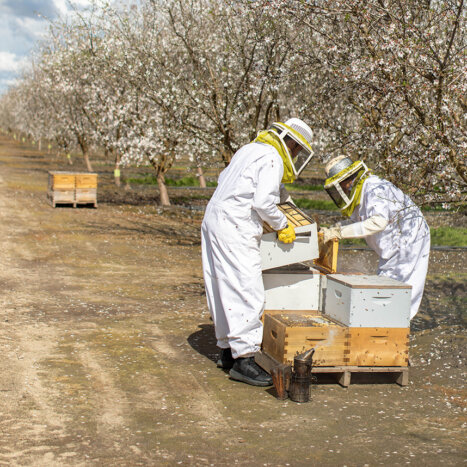
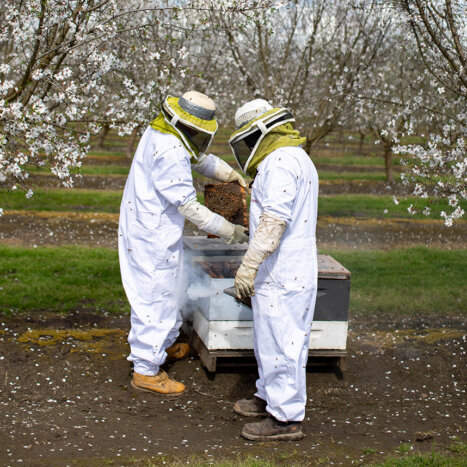
At Nate’s Hives, we have a special place in our hearts for the hardworking honey bee, but we appreciate the many bees, flies and wasps that contribute to healthy ecosystems. The next time you see a striped creature zipping around your garden, take a second look – you just might catch a master imposter showing off its disguise!
Read MORE