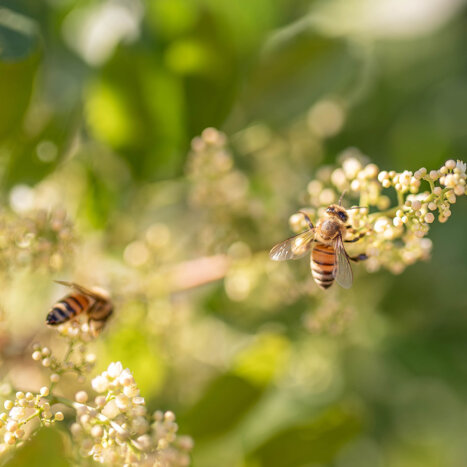
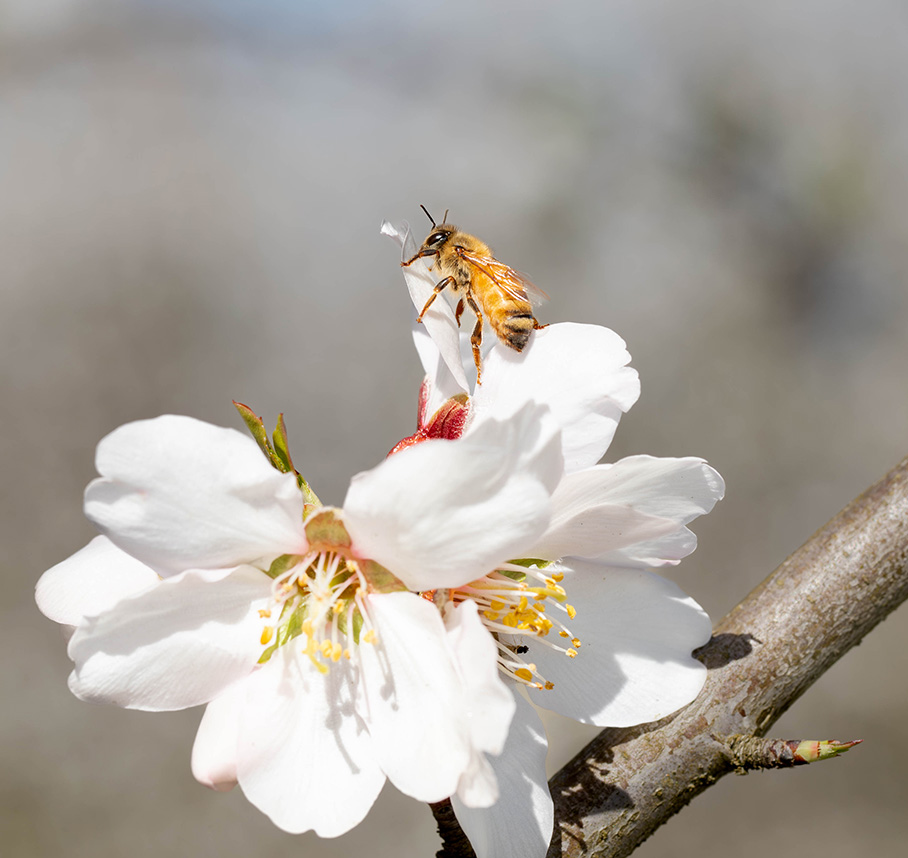
If you’ve ever sat near a garden in full bloom, you’ve heard the familiar, low-pitched hum of a honey bee zipping from blossom to blossom. They appear effortlessly fast, darting in and out of sight before you can get a clear look. At Nate’s Hives, we have a deep appreciation for these tiny powerhouses and the incredible effort it takes for them to travel from hive to flower to make pure, delicious honey.
So, just how fast are honey bees actually flying? And how do they navigate the landscape so precisely while carrying heavy loads of pollen and nectar? Let’s dive into the fascinating world of honey bee flight mechanics, speed, ranges and the surprising navigational secrets scientists are uncovering.
Unlocking the Speed of a Honey Bee
When it comes to top speed, a honey bee is no slouch for her size, but her actual pace in the air depends a great deal on what she’s carrying:
- Unloaded Flight: An unencumbered worker bee heading out on a foraging trip typically flies at an average speed of 15 to 20 miles per hour (about 24 to 32 km/h).
- Fully Loaded Flight: Returning to the hive is a heavier task. Loaded down with nectar inside her stomach and heavy pollen packed into her hind leg pollen baskets (corbiculae), a returning honey bee’s speed drops to around 12 miles per hour (approx. 19 km/h).
To put that into perspective: A honey bee’s tiny wings beat around 230 times per second. That frequency generates the signature “buzzing” sound we hear whenever they pass by!
How Do Their Tiny Wings Beat Gravity?
For a long time, an old urban myth claimed that, according to aerodynamics, honey bees and bumblebees shouldn’t be able to fly. In reality, scientists now know that bees don’t fly like airplanes; they fly more like helicopters.
- Flexible Wings: Honey bee wings are made of thin layers of chitin supported by delicate veins. Rather than flapping up and down rigidly, their wings twist and rotate in tiny, rapid sweeping motions.
- Creating Lift: This unique short-arc sweeping motion creates localized mini-vortices (whirlpools of air) above the wing. These vortices generate low air pressure, pulling the honey bee upward and providing immense lift relative to their small body size.
- Hamuli (Wing Hooks): A honey bee actually has four wings – two on each side. When in flight, a row of tiny hooks called hamuli links together the front and hind wings on each side, allowing them to function as a single, powerful pair of surface areas.
Flight Range and Foraging Behaviors
Flight speed is only part of the story when it comes to honey bee locomotion; energy efficiency and endurance are where honey bees truly excel.
- Typical Foraging Range: Most worker bees forage within a 1- to 3-mile radius (2 to 5 km) of their hive.
- Maximum Distance: If local nectar sources are scarce, honey bees are capable of traveling up to about 5 miles (approx. 8 km) away from home in search of food.
- Fuel Efficiency: Honey bees require energy in the form of honey or nectar to power their high-speed flight muscles. Despite their tiny size, honey bees are remarkably efficient flyers, capable of traveling considerable distances in search of food.
During foraging trips, honey bees demonstrate remarkable decision-making behavior. They perform constant risk-reward assessments – factoring in flower distance, wind speed, load weight and nectar quality – to ensure the energetic reward brought back to the hive exceeds the flight energy expended.
Precision Navigators of the Insect World
While we know honey bees use the “waggle dance” inside the hive to communicate approximate directions and distances to good food sources, recent scientific research reveals that their actual navigation in the air is far more personalized than previously believed.
Researchers tracking wild honey bees with high-resolution 3D drone systems found that individual bees develop and memorize their own specific flight routes.
Key takeaways from recent studies include:
- Centimeter Precision: Once a honey bee becomes familiar with a landscape, she flies her own personal, repeatable route, often staying within just a few centimeters of her previous path.
- Landmark Navigation: Honey bees actively rely on visual features in the environment, such as trees, hedges and field edges, to orient themselves and maintain precise trajectory paths.
- Beyond the Waggle Dance: While the directional dance back at the hive gives sister bees a general area to explore, an individual worker’s spatial orientation becomes extraordinarily precise once she learns a familiar route.
The Marvel of Honey Bee Flight
The next time a honey bee zooms past you at 15 miles per hour, remember that you’re watching a master of biological engineering. From tiny wing-hooking mechanisms to personalized flight corridors mapped accurately across miles of open air, honey bees are fast, efficient and remarkably smart navigators. These tiny powerhouses are built to keep their hives thriving, honey flowing and our food systems growing.
Read MORE